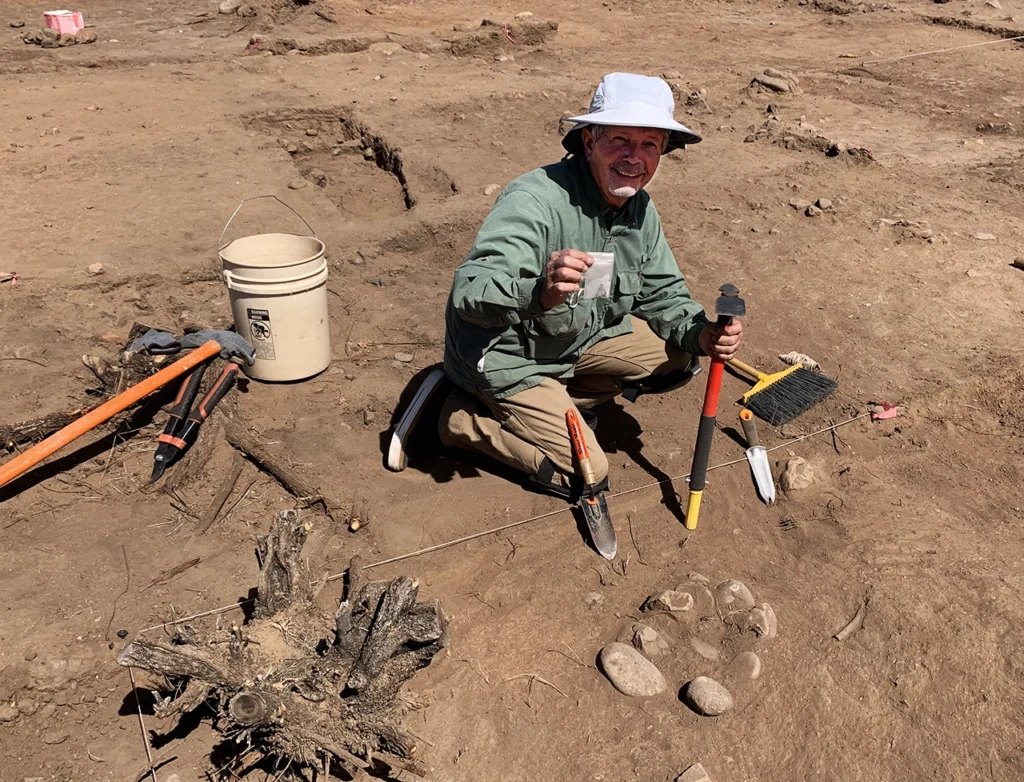
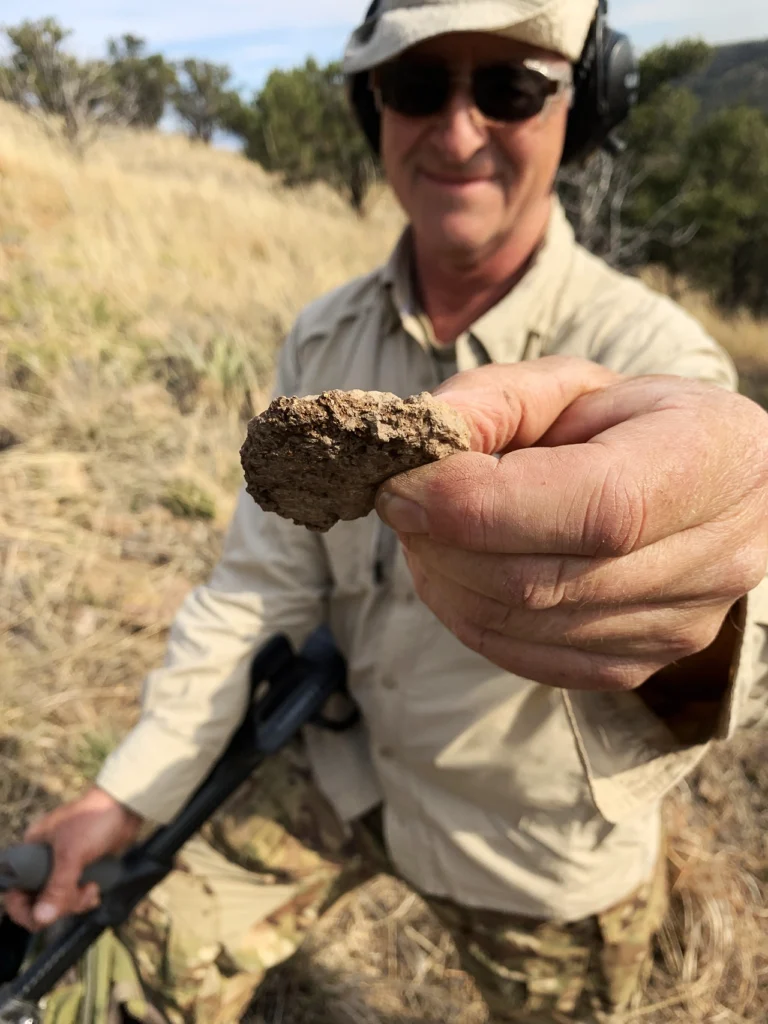
Dan during a dig at the 1541 battle site of Coronado's conquistadors slaughtered by Sobaipuri-O'odham.
Alright, we admit it. Dan is an odd duck with an unusual combination of backgrounds. But it’s that combination of earth sciences and experience that also helps us in decoding history’s mysteries on how find time-hidden sites to go pure detecting. Here’s why…
As an exploration geologist with his own consulting firm, he specialized in “remote sensing” techniques, both above and below the ground in making dozens of remarkable geophysical discoveries that unlocked the precise locations of hidden geological formations.
Yet his fascination with the past also lured him into archaeology exploration, both prehistoric and Spanish discoveries that helped rewrite history, including recent ones aided by detecting.
Both of those passions included extensive research into historical records and refined aerial imagery interpretation using enhanced resolution techniques that revealed hidden sites.
The bottom line… yep, he’s an odd duck for sure. But at least he’s our odd duck now with a detector in hand ideally suited to help all of us find long-lost sites for the thrill of pure detecting.
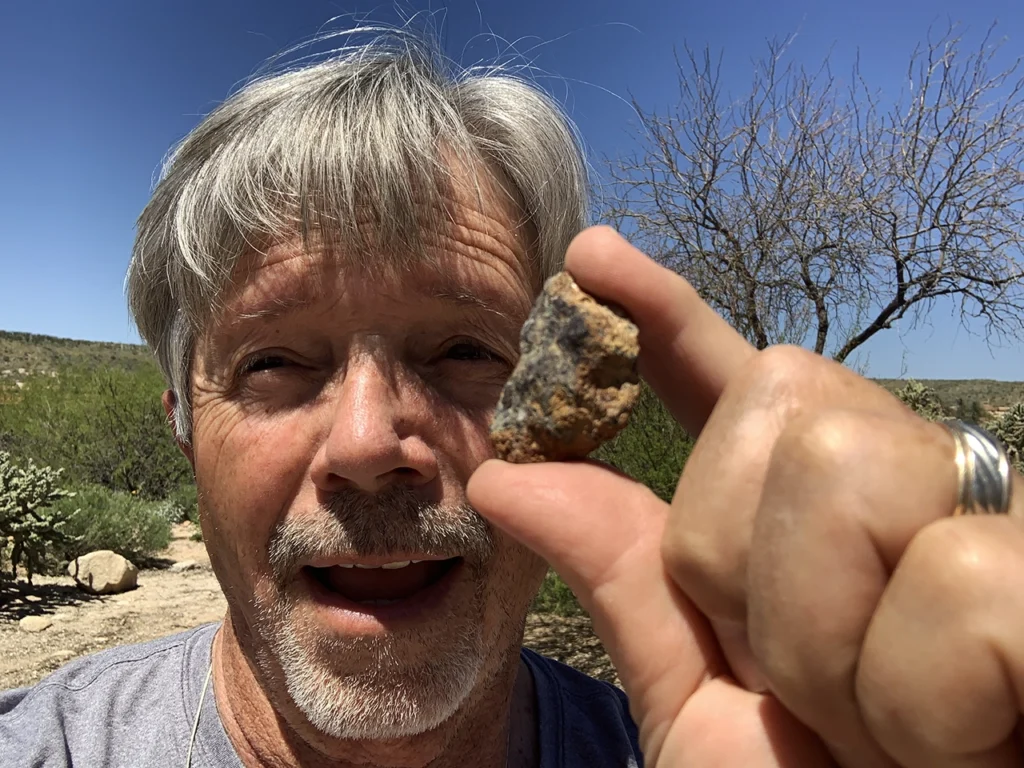
Combining geology with “enhanced” LiDAR and satellite mapping overlays led Dan and friends to gold and silver nugget discoveries, including this 3-oz. “cookie”
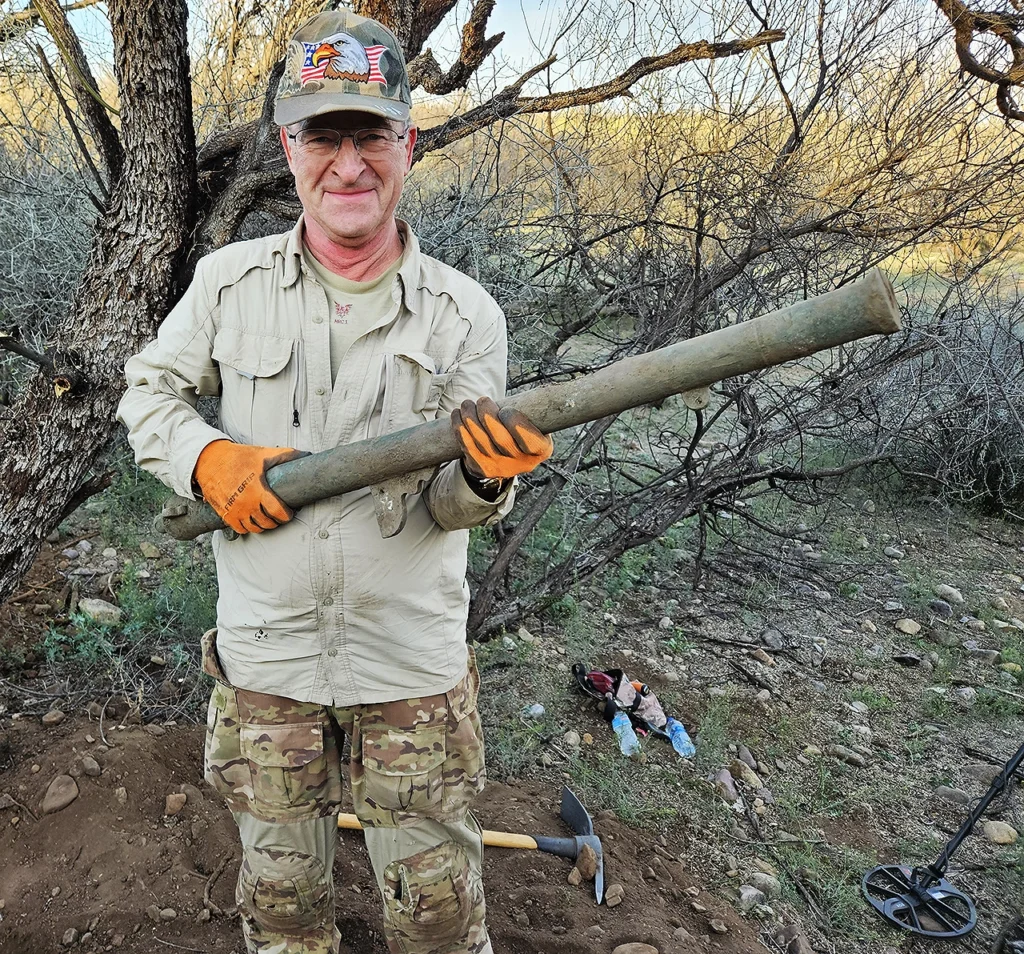
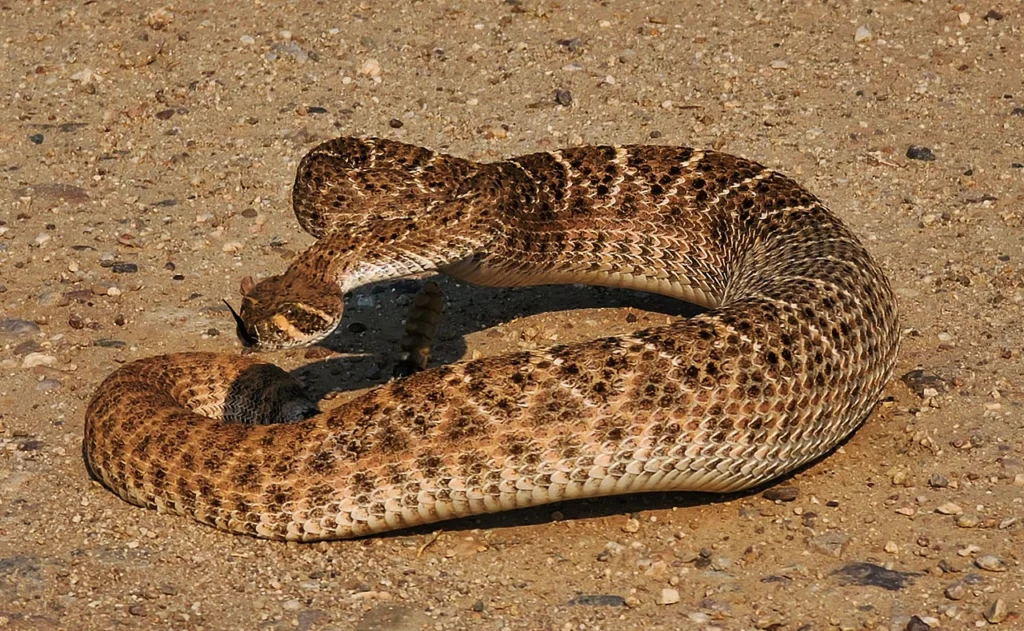
They used detectors (thanks Minelab) to decode Coronado’s trails that led to the discovery of this priceless bronze cannon. But beware of the locals!
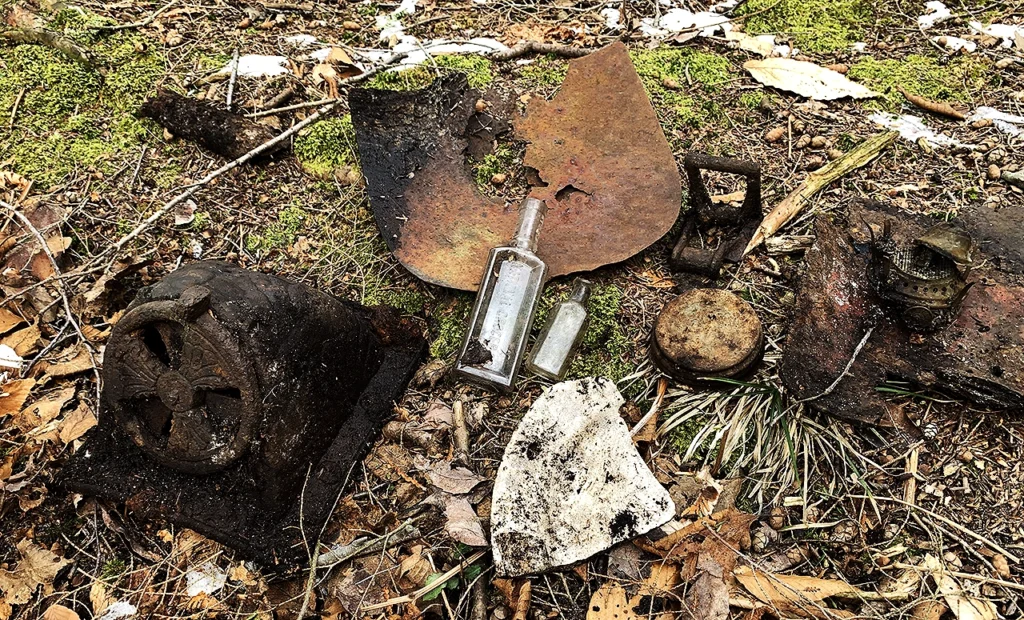
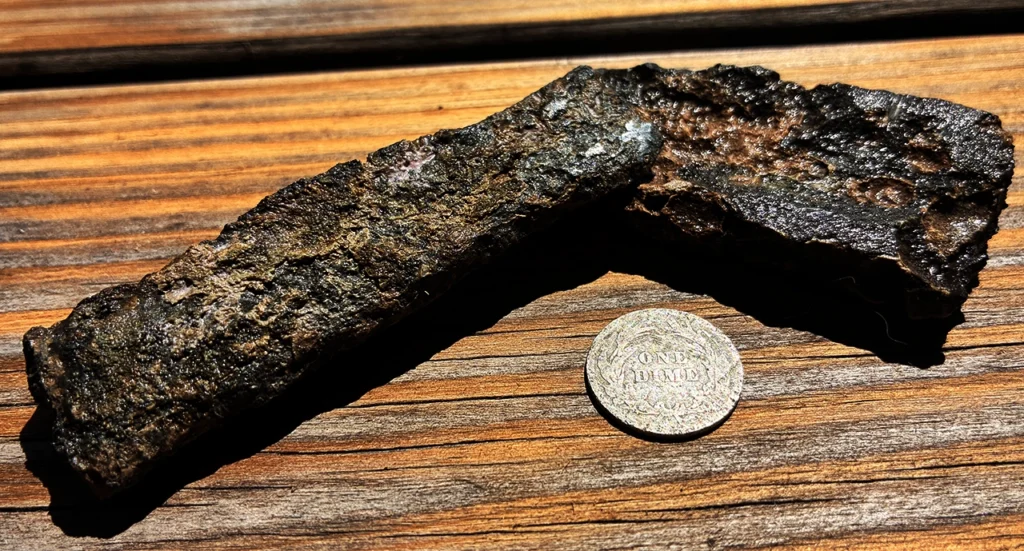
Lost for 150 years, using enhanced LiDAR and graphic mapping overlays led Dan to hidden logging camps and train depots to find relics, crude silver bars and coins.
Now that you understand some of the science and today’s free resources that help unearth treasures, begin the lessonsto discover your pure detecting